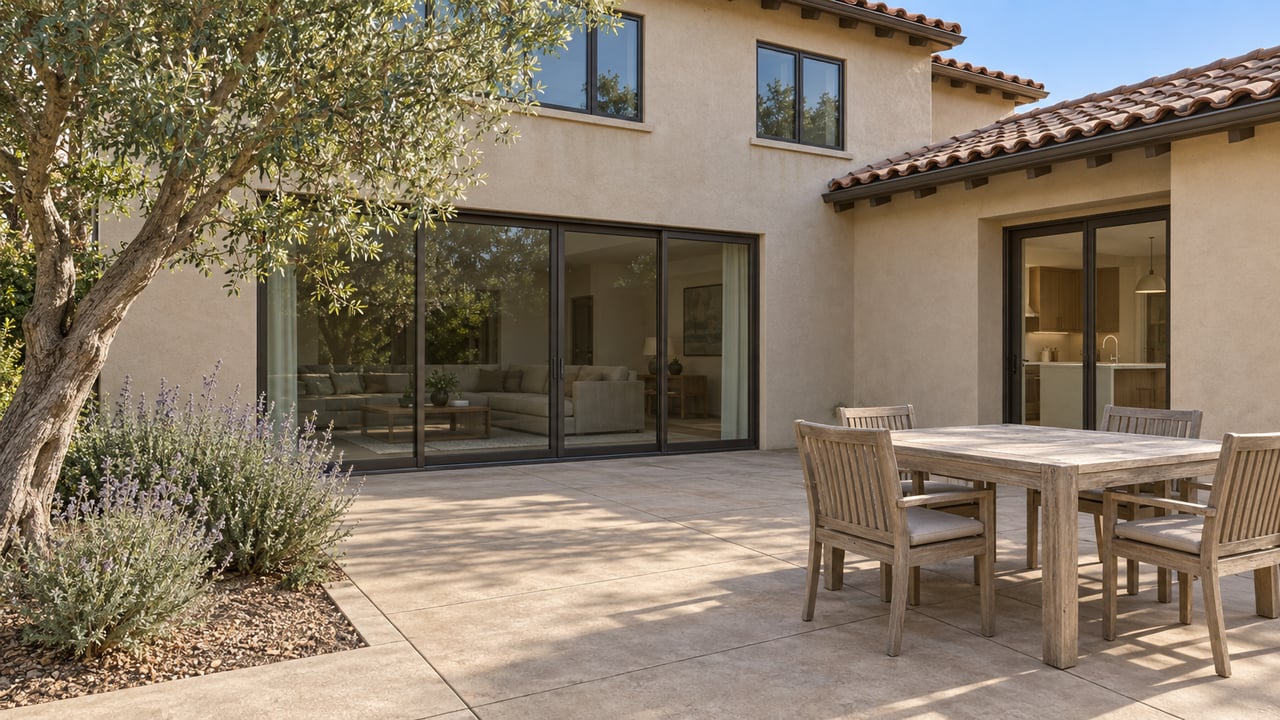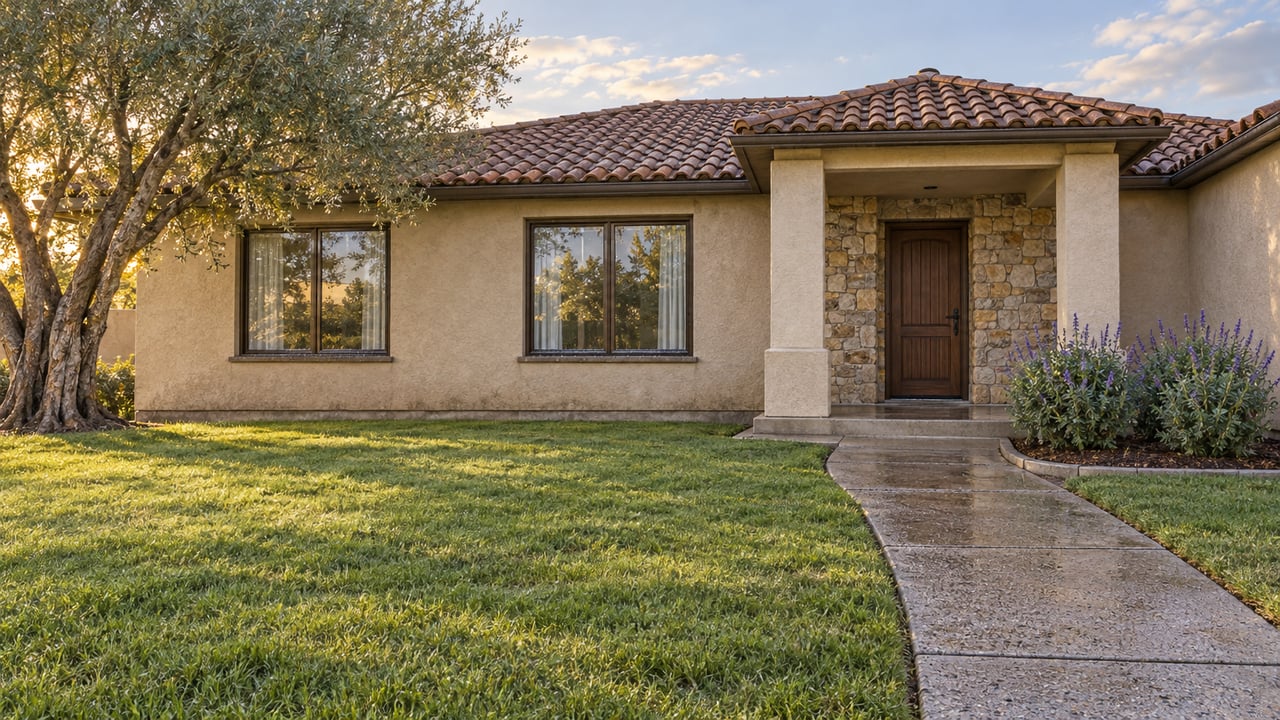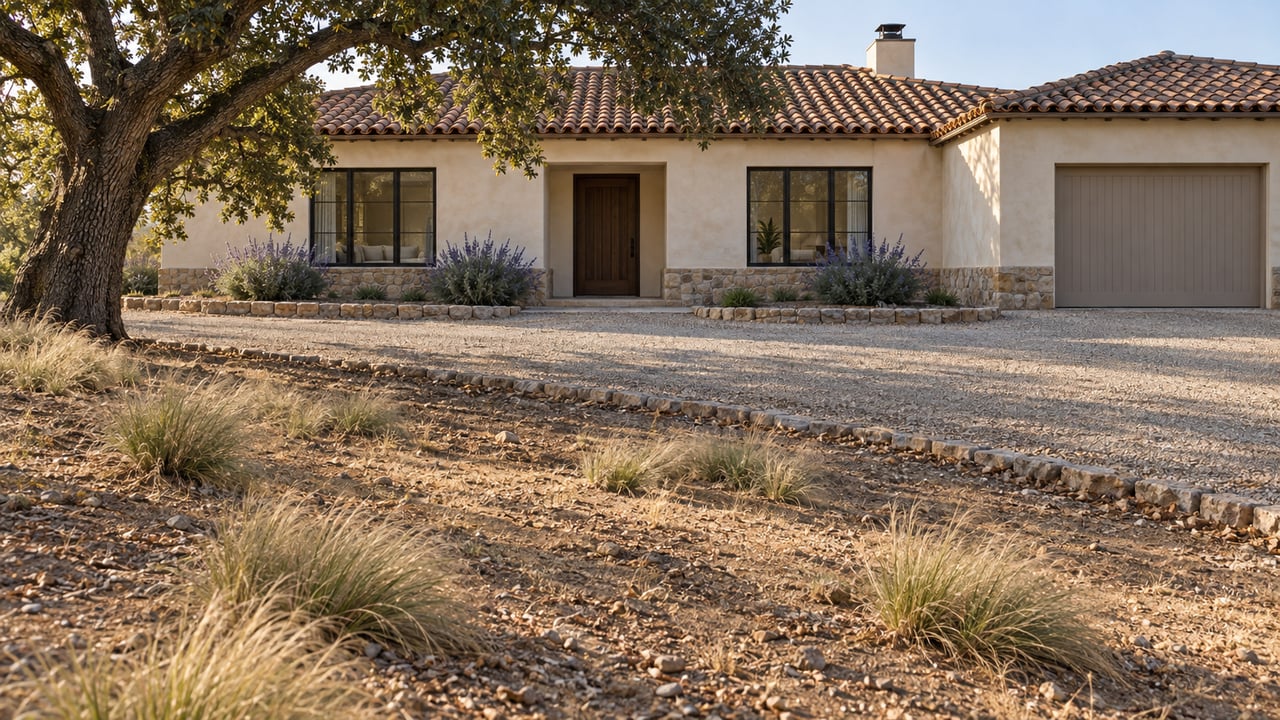
Two ten-acre parcels sit within a few miles of each other in Bonsall, both within reach of Gird Valley and the rolling grove country near Monserate Winery. One lists for noticeably less per acre than the other. A buyer touring both usually assumes the gap comes down to grading, road access, or the cost of drilling a well. Sometimes it does. But in a meaningful share of Bonsall's rural acreage, the real answer is sitting in a county file, not in the listing photos: one parcel is enrolled in a Williamson Act contract that, as the California Board of Equalization explains, bases its taxable value on agricultural income rather than potential market value.
That distinction matters more in Bonsall than almost anywhere else I work, because Bonsall's housing stock isn't one market. It's a scatter of horse ranches, avocado groves, hillside estates, and newer single-family lots, all folded into the same unincorporated community. A buyer comparing price per acre across that mix without knowing which parcels carry a standing agricultural contract is comparing two different products as if they were one.
The Median Price Depends on Which Site You Check, and That's the Tell
Anyone shopping Bonsall land has probably already noticed the numbers don't line up. Zillow's typical home value for Bonsall sits at $925,238, down 3.4 percent over the past year. Redfin's most recent monthly snapshot puts the average sale price closer to $999,000, down 7.9 percent year over year, with homes now taking a median of 136 days to sell compared to 47 days a year earlier. Movoto, tracking active list prices rather than closed sales, has shown a median list price around $1.25 million as recently as August 2026, with price per square foot in the low $400s and only around 51 active listings on the market at a time.
None of these sources is wrong. They're measuring different things: a list price, a typical estimated value, an average of what actually closed. But even accounting for that, a spread this wide, from the high $900,000s to well past $1.25 million, on a market with barely fifty active listings, is a signal in itself. Bonsall doesn't sell enough homes in a given month for a single median to mean much. A handful of high-acreage estate sales or a single agricultural-contract parcel closing at a discount can swing the whole number. Redfin's own data shows just how far that swing can go: less than a year before its most recent reading, the same tracker recorded a monthly median as low as $514,000 in October 2025, driven by a thin handful of closings rather than any real shift in what land is worth.
The practical takeaway isn't that the numbers are useless. It's that a buyer needs to know which segment of Bonsall's inventory they're actually looking at before a median price tells them anything. And one of the clearest lines separating those segments is whether a parcel sits inside a county agricultural preserve.
The Line an Appraisal Won't Draw for You
Bonsall's own community plan, filed with the county, puts a number on this. Of the acreage inside Bonsall's designated agricultural preserves, roughly 112 acres are enrolled under an active Land Conservation Contract, the formal name for a Williamson Act agreement. The same plan notes that avocado farming is Bonsall's most significant commercial agricultural activity by gross income, which is part of why these preserves exist here in the first place: the county has spent decades trying to keep working grove land from converting to subdivisions.
A Williamson Act contract changes how a parcel is taxed. Under the California Board of Equalization's own description, land enrolled in a Williamson Act contract is assessed based on the income it generates from agricultural use, not on what it could fetch at full market value. The California Department of Conservation estimates the tax savings from this arrangement can run anywhere from 20 to 75 percent a year compared to a standard assessment.
That's a real number, but it's not the part that catches buyers off guard. The part that matters at the negotiating table is that the contract itself doesn't expire when the property changes hands. It runs with the land.
What a Buyer Actually Inherits
A California Department of Conservation overview describes a Williamson Act contract as a rolling agreement that typically renews automatically each year unless the landowner or the county files a formal notice of nonrenewal, which starts a roughly decade-long countdown before the restriction lifts. Buy a parcel under contract, and that clock, and the restriction, transfers to you. You don't get to simply decide on day one that you'd rather subdivide or build out the lot for something other than agricultural or compatible use.
Getting out early is possible but deliberately difficult. Only the landowner can petition to cancel a contract, the county has to make specific findings before approving it, and state guidance is explicit that the mere existence of a more profitable alternative use, or the fact that the current agricultural use isn't very profitable, isn't by itself a good enough reason to grant a cancellation. A landowner who wants out also owes a cancellation fee on top of clearing that review.
None of this means a contracted parcel is off-limits for the kind of lifestyle Bonsall buyers are usually chasing. The County of San Diego says equine use is generally treated as compatible with agricultural preserve status, which lines up with how much of Bonsall's land is already used for horse boarding and training. The restriction isn't aimed at horses. It's aimed at converting the land to dense residential or commercial use, which is exactly the kind of upside a buyer might be quietly pricing in when they see a low number per acre.
What to Actually Check Before the Price Per Acre Wins You Over
A few questions are worth settling before a Bonsall acreage listing feels like a deal:
- Is the parcel located inside one of Bonsall's designated agricultural preserves, and if so, is there an active Land Conservation Contract recorded against it, not just preserve status on paper.
- Does the current property tax bill already reflect an income-based Williamson Act assessment, which would explain a number that looks unusually low relative to comparable acreage nearby.
- If a contract exists, what year did the current owner or a prior owner file it?
- Does the intended use, whether that's a residence, a small grove, or a horse operation, fall within what the existing contract already permits, or would it require a change the county would need to approve.
These aren't questions a standard comparative market analysis answers on its own. They live in the county's agricultural preserve records and the recorded contract itself, not in the MLS sheet.
A Few Questions Worth Answering Directly
Does every rural parcel in Bonsall carry a Williamson Act contract? No. Bonsall's community plan identifies 492 acres total inside designated agricultural preserves, with about 112 of those acres under an active contract. That's a real slice of the community's rural acreage, but it's far from all of it, which is exactly why two similarly sized parcels can land on opposite sides of this line.
Can a new owner cancel the contract right after closing? Only the landowner can petition, and the county has to approve specific findings before granting a cancellation, plus a fee. Wanting to use the land differently isn't, by itself, sufficient grounds.
Does a contract rule out keeping horses? Generally no. Contracts are written around agricultural and compatible uses, and equine activity is commonly treated as compatible. The restriction targets converting the land to non-agricultural development, not the lifestyle uses Bonsall is already known for.
Buying acreage in Bonsall means comparing dirt, water, access, and now a legal status that doesn't show up in most listing photos. Working through what a specific parcel's agricultural preserve status actually means for a purchase, a build, or a future resale is exactly the kind of groundwork Zachary Frausto walks Bonsall buyers through before an offer goes in, not after.
This article is general information, not legal, tax or financial advice. Consult a qualified professional about your situation.